Find your adoption path
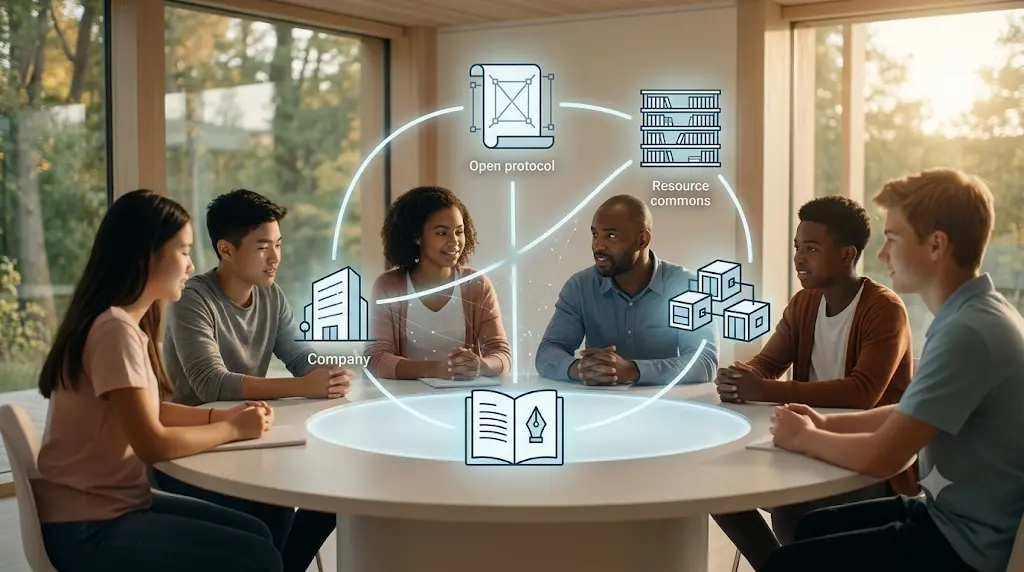
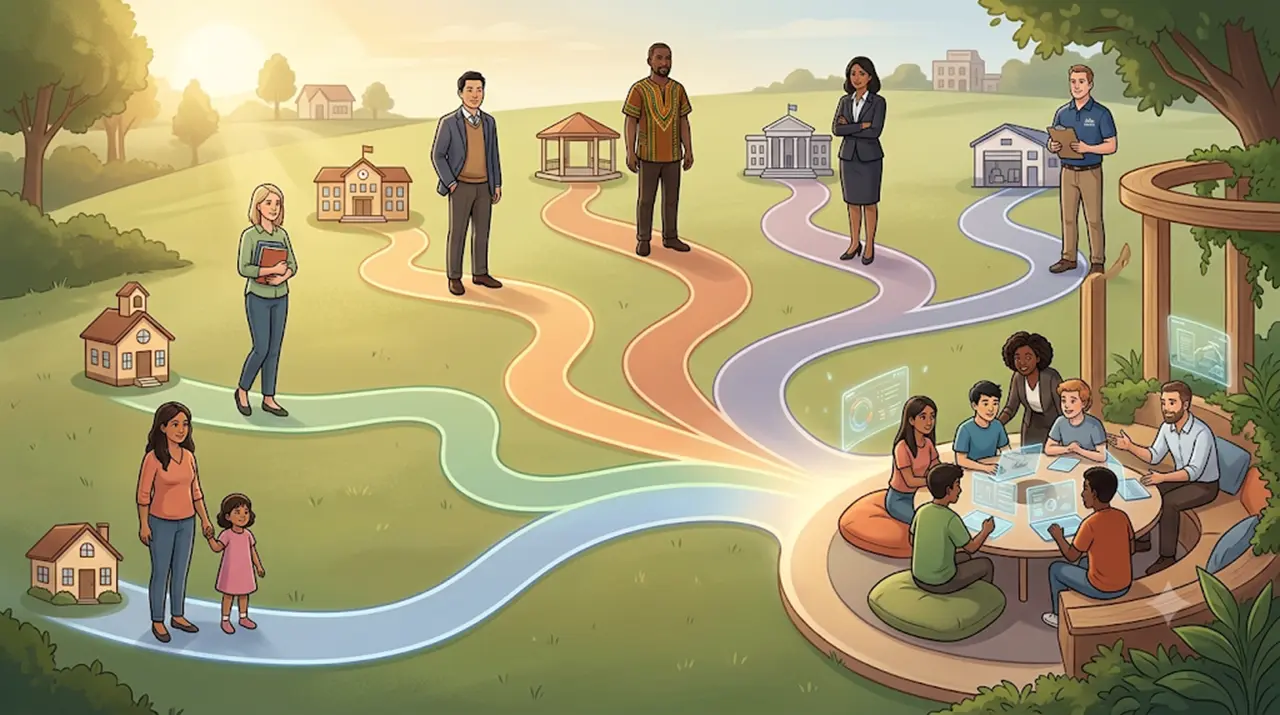
Different communities can begin from different doors. The protocol is designed for parents, teachers, schools, centres, governments, and faith or community leaders.
The common starting point is simple: create a small cell, make learning intentional, use AI as support rather than replacement, and document real projects that help learners grow beyond passive schooling.
| You are... | Start with... | Path |
|---|---|---|
| A parent | Start a supplementary cell outside school hours. No permission needed. | Tier 1 |
| A teacher or mentor | Read the seven pillars and the mentor role guide on Substack. | Pillars |
| A school leader | Download the specification. It includes the zero-cost pilot restructuring pathway. | Download |
| A faith or community leader | Implement in your own tradition's vocabulary. No Peconaqri content required. | Faith guides |
| A government official | Read the adoption pathway. It includes the economic reframe and pilot approach. | Download |
| A centre operator | Explore Tier 2 free resources or Tier 3 formal affiliation. | Tier 3 |
What it is, and what it is not
What it is
The Open PMC Protocol proposes the Personal Mentoring Cell as a new basic unit of education for the AI age.
A PMC is a small, mentor-led group of four to twelve learners. It can supplement, hybridise with, or eventually replace the industrial-age classroom where context permits.
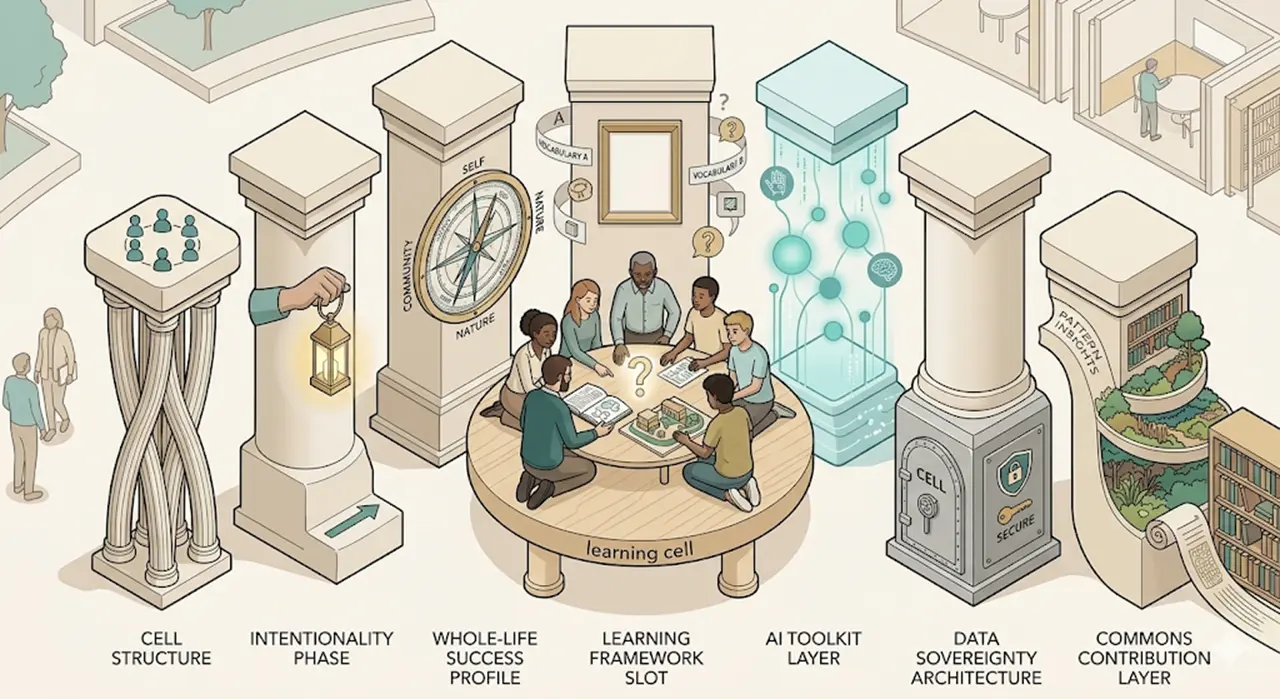
The protocol specifies what every PMC cell must have: a consistent mentor relationship, a structured Intentionality Phase, a Whole-Life Success Profile, explicit vocabulary for drift and awakening, a two-function AI toolkit, cell-owned data, and an optional pathway to contribute to the Open PMC Commons.
What it is not
The Open PMC Protocol is not a product, franchise, school chain, or proven system at scale.
It is an open design standard shared freely so that communities worldwide can begin building the evidence that validates, refines, or improves it.
It is also not Peconaqri. Peconaqri is one specific implementation of this protocol, using Game of Life, NPC/PC, and Cube of Life language.
Zero-cost public school adaptation: The protocol is adaptable to high-density public school environments through on-site alternating campus shifts, with no new hires required for the pilot phase.
Seven structural pillars
Every Personal Mentoring Cell must meet all seven requirements.
An implementation that meets all seven is a PMC cell regardless of vocabulary. An implementation that omits any one of them is not implementing the Open PMC Protocol.
4 to 12 learners, 1 consistent mentor, consistent schedule, consistent space. The relationship is the foundation.
Before every learning cycle, every learner consciously chooses active engagement over passive reception.
A multi-dimensional account of flourishing covering at minimum self, community, and natural world.
An explicit vocabulary for the distinction between unconscious drift and intentional living.
Minimum: one learner-facing AI function and one cell-facing Organisation Brain.
The cell owns its canonical data. The AI model is the interface, not the record of truth.
Voluntary, anonymised pattern-level insights only, never raw data.
AI supports the cell. It does not replace the mentor.
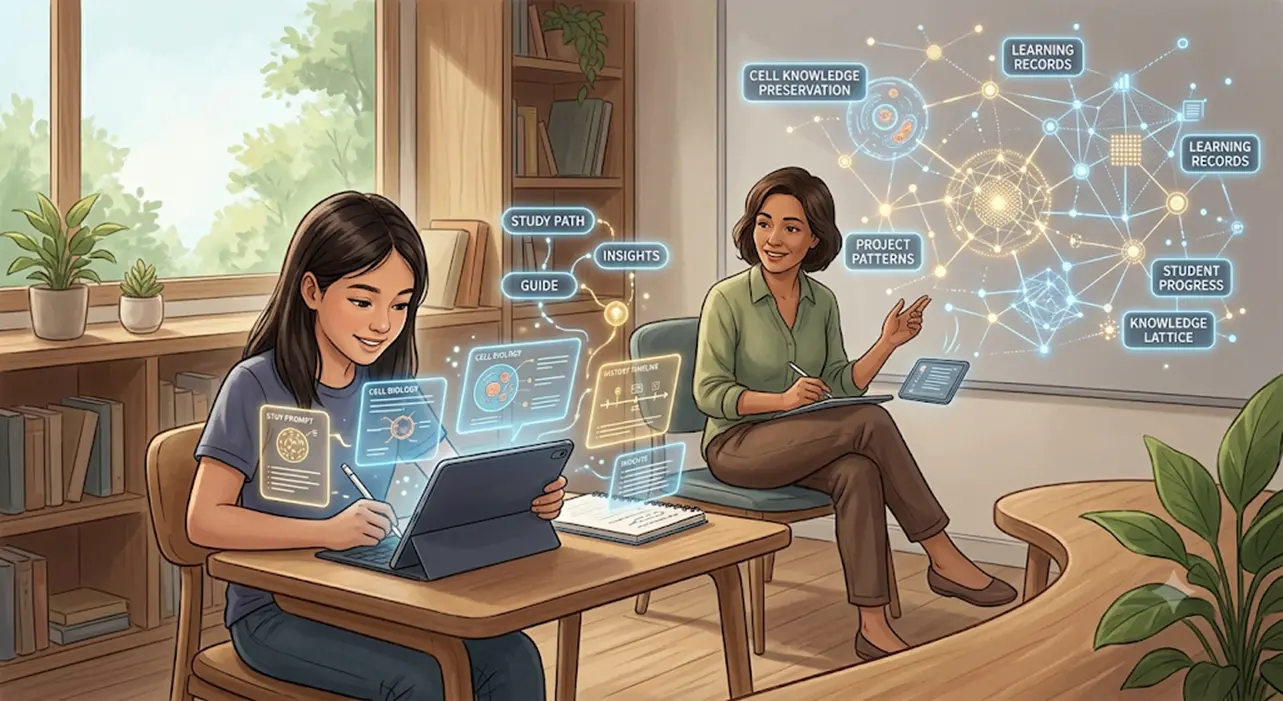
The Open PMC Protocol requires a minimum AI toolkit with two functions: one learner-facing guide and one cell-facing Organisation Brain.
The learner-facing function helps students ask better questions, practise, reflect, and prepare work. The Organisation Brain preserves the cell's own knowledge, routines, project patterns, and records across cohorts.
The important rule is simple: the cell owns the record of truth. AI is the interface, not the institution.
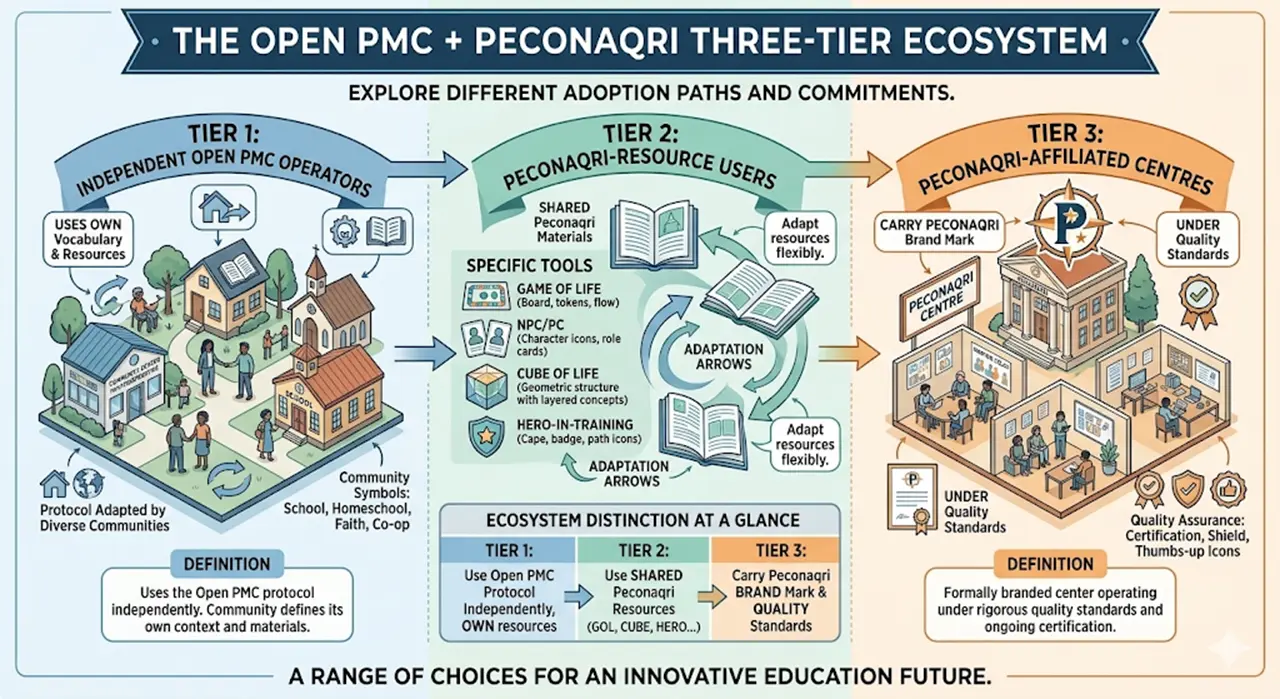
Three ways to implement
Any community can implement the Open PMC Protocol.
The three tiers reflect different relationships to Peconaqri's vocabulary and brand. They are not different levels of quality or commitment.
Download the specification
The Open PMC Protocol Reference Specification contains the full seven-pillar specification, the learning cycle, the four variable dimensions, the cell hierarchy, the AI toolkit architecture, the data governance rules, and the licensing terms.
Open PMC Protocol Reference Specification v1.0
CC BY 4.0 · June 2026 · Published by Peconaq Inc.
Attribution required: "Based on the Open PMC Protocol, published by Peconaq Inc. at peconaq.org under CC BY 4.0."
Contribution is voluntary, safe, and pattern-based.
A cell may contribute anonymised pattern-level insights to the Open PMC Commons. It never needs to share raw student data.
This allows communities to learn from one another while preserving local ownership, privacy, and autonomy.

Read the development record
The Open PMC Protocol is being developed in public at drleejin.substack.com. The following posts form the core canon.
The Seven Lessons Industrial-Age Schooling Teaches Our Children
Why a 91-year-old woman grasped AI learning faster than most school-trained adults, and what that reveals about the system we are replacing.
Read on SubstackThe Industrial Classroom Was Designed for a World That No Longer Exists
Three structural failures of the industrial classroom, and what follows from each in the age of AI and algorithmic capture.
Read on SubstackIntroducing the Open PMC Protocol
What a Personal Mentoring Cell is, how its seven pillars work, and how any community can implement it in its own vocabulary.
Read welcome pageHow the Open PMC Protocol Gets Adopted
Government school restructuring, three regulatory contexts, three adoption modes, and the economic reframe for ministries of education.
Read welcome pageFaith and the Open PMC Protocol
How Islamic, Christian, Jewish, Buddhist, Hindu, and secular communities can implement the protocol in their own authentic vocabulary.
Read welcome pageYour Tradition, Your Cell
Tradition-specific implementation guides, each designed as a complete Tier 1 starting kit.
Read welcome pageAny implementation involving minors must comply with local education law, safeguarding requirements, parent or guardian consent, data protection rules, and age-appropriate AI platform policies. The Open PMC Protocol is an educational design proposal, not a substitute for legal, professional, clinical, or religious authority.